

Meetings aren’t the problem – what happens after them is. If MeetGeek isn’t giving your team reliable summaries, clear action items, or an easy way to share outcomes across stakeholders, it’s worth looking at alternatives. In 2026, the best MeetGeek alternatives go beyond transcripts with stronger team collaboration, better accuracy, flexible workflows, and integrations that turn discussion into tasks, follow-ups, and CRM updates. This guide highlights the top options for teams that want faster recaps and fewer dropped next steps.
TL;DR – Best MeetGeek Alternatives
- FuseBase: best for shareable mini-room with client recap
- Read.ai: best for meeting analytics
- Gong: best for sales + revenue intelligence
- Supernormal: best for clean summaries
- Fathom: best for fast highlights + recaps
- Avoma: best for sales/CS coaching + workflows
- Otter.ai: best for transcription + search
- tl;dv: best for clips + async sharing
What is MeetGeek?
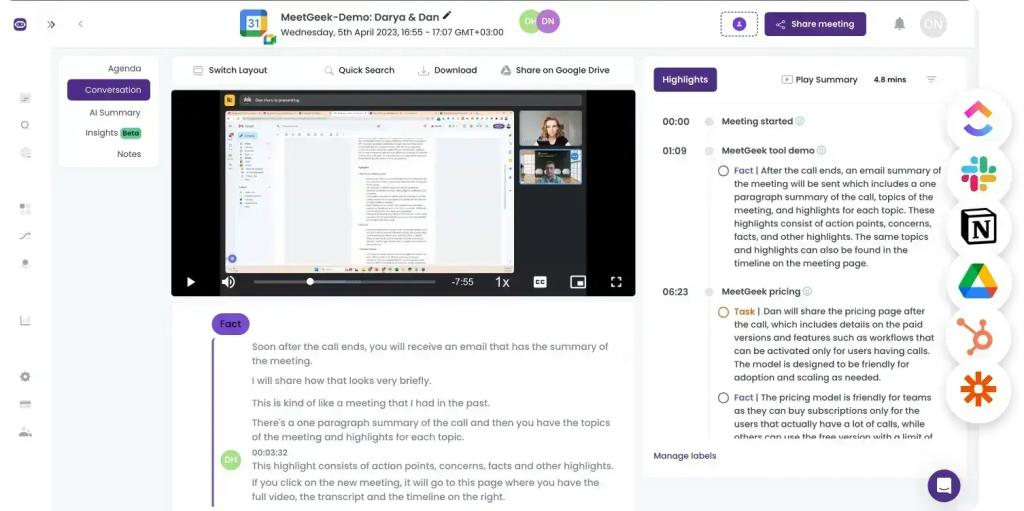
MeetGeek is a meeting assistant that automates note-taking, transcription, and summarization for both online and offline meetings. It plugs into your existing stack with thousands of integrations, so set-up is quick and handoffs stay seamless. It also processes uploaded audio or video files. You can apply custom templates, organize conversations into folders, and capture key points, highlights, and video recordings in a searchable library. For collaboration and revenue teams, MeetGeek adds conversation intelligence that tracks speaker talk time, sentiment, participation rates, and other performance signals, delivering personalized coaching mid- and post-meeting. A standout advantage is access to advanced features on the free tier, letting teams fold MeetGeek into their sales process immediately without a steep learning curve.
Why Teams Replace MeetGeek
Why teams replace MeetGeek often comes down to speed, accuracy, and what happens after the meeting. Here are the most common reasons teams look for MeetGeek alternatives:
- No simultaneous multi-language transcription: MeetGeek can’t transcribe multiple languages at the same time in one meeting.
- Summaries may miss nuance: Recaps can overlook context-specific details and “why” behind decisions.
- Costly higher tiers: Advanced plans can feel expensive for small teams as usage scales.
- Fewer integrations: Limited connections with CRMs and dialers, which slows sales/CS workflows.
- Transcription accuracy complaints: Struggles with heavy accents, jargon, and industry-specific phrases (per user feedback).
- Inflexible recording controls: Bot joins meetings by default; you often have to manually disable it.
- No AI Copilot: Lacks on-demand Q&A to quickly answer questions about meetings and outcomes.
- Slow meeting sync: New meetings may take up to an hour to appear after syncing.
- Can’t start mid-meeting: Users can’t start transcription mid-call unless it was pre-scheduled.
8 Best MeetGeek Alternatives in 2026
1. FuseBase
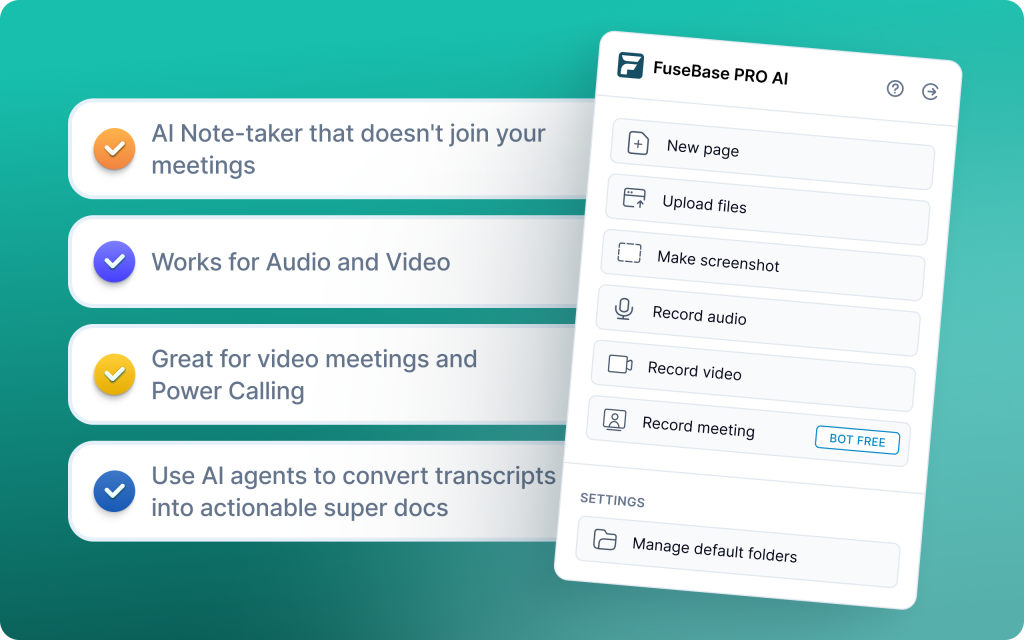
FuseBase is a bot-free AI meeting recorder and client workspace that turns every Zoom, Teams, or Meet call into a shareable mini-room with recap, decisions, next steps, and supporting assets (decks, ROI calcs, contracts, Loom-style clips). Beyond notes, FuseBase includes AI agents that watch for risks, opportunities, and follow-ups, then auto-create tasks, populate trackers, and trigger workflows in your existing tools. Each mini-room is fully white-labeled under your domain and can safely split client-ready summaries from internal coaching and risk, evolving your recorder into a true Client Delivery Platform.
Why FuseBase is better than MeetGeek
FuseBase trades naked transcript links for branded mini-rooms that clients actually use, layers deeper revenue signals (scope creep, no next meeting, renewal risk) over basic CI, and lets AI agents push real actions into your tools. You get consistent white-label experiences across every call, dashboards that surface gaps at the account level, and an automatic external vs internal split. It eliminates admin “glue” work and protects margins in ways MeetGeek’s bot-first recorder and summaries do not.
2. Read.ai
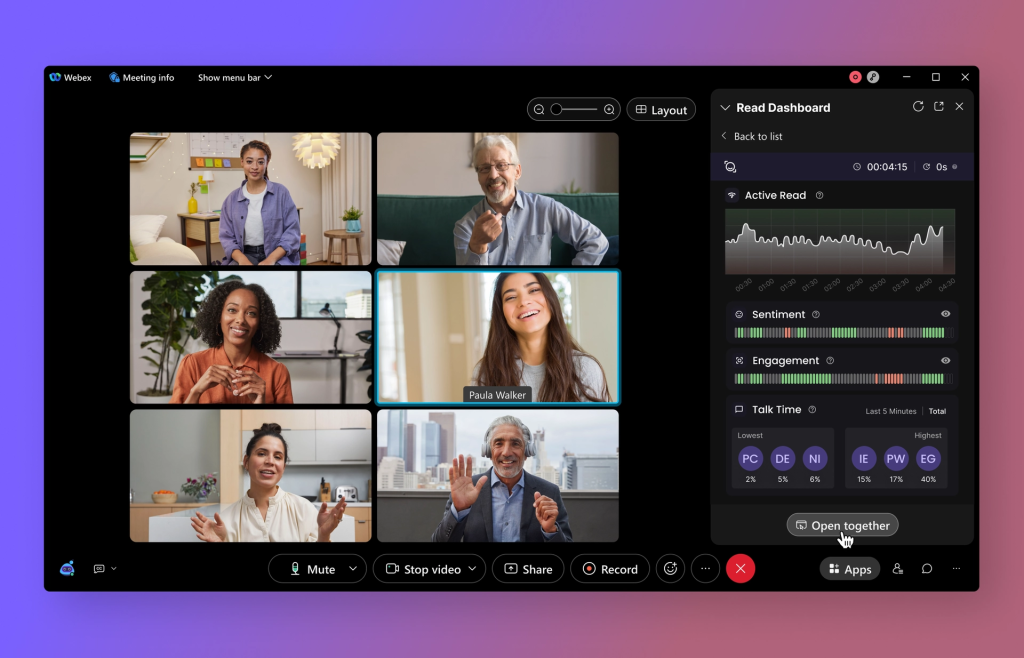
Read.ai is an AI meeting assistant built for live insights and fast retrieval. It delivers automatic note-taking, smart summaries, and real-time collaboration while tracking engagement and speaker performance. Transcription 2.0 layers sentiment and audience reactions onto the transcript, and its coaching gives feedback on clarity, talk time, and filler words. The Search Copilot lets you chat across meetings, email, chat, and docs to pull answers instantly. It also creates cross-platform summaries from Gmail, Outlook, Slack, and Teams, with a free tier for quick evaluation.
Why Read.ai is better than MeetGeek
Read.ai goes beyond static notes with live engagement analytics, sentiment cues, and speaker coaching that help teams course-correct during the call, not just after. Its Search Copilot retrieves answers across your meetings and comms stack in seconds, reducing manual hunting. For teams prioritizing real-time feedback, performance coaching, and cross-platform summaries, Read delivers faster insight and broader knowledge access than MeetGeek’s transcription-first approach.
3. Gong
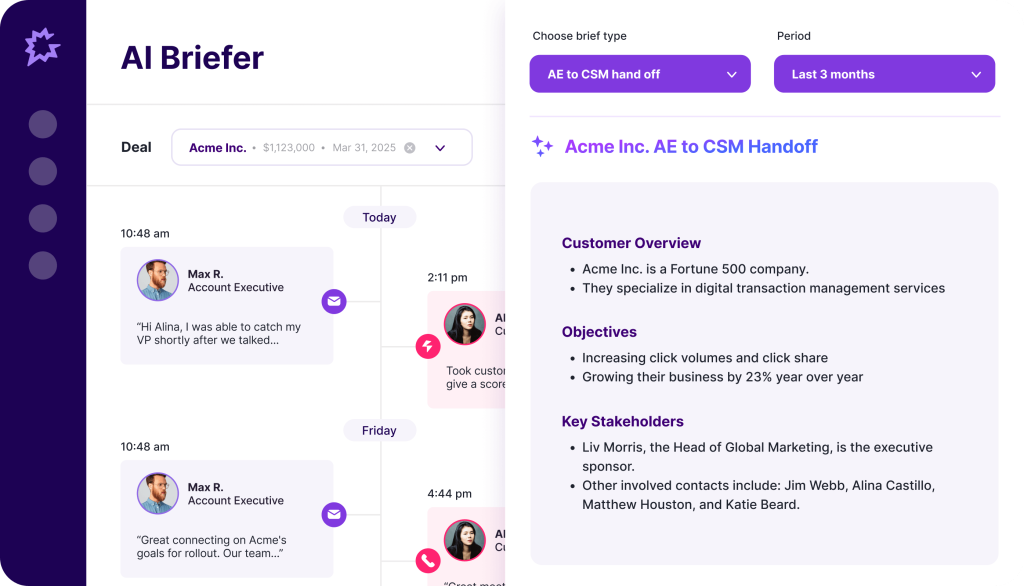
Gong is a revenue intelligence platform purpose-built for sales. It captures and analyzes customer interactions across Zoom, Google Meet, and your CRM to surface deal risks, product interest, and coaching opportunities. Beyond transcription, Gong ties calls to pipeline, delivers AI summaries and follow-ups, and gives leaders clear deal views, risk alerts, and automated forecasts so they can manage revenue with data, not hunches.
Why Gong is better than MeetGeek
If you need enterprise-grade sales analytics, Gong goes far deeper than MeetGeek. It combines conversation intelligence with deal and pipeline insight, flags risk at the opportunity level, and equips managers with coaching at scale plus AI-driven forecasting. The result is tighter execution across the whole funnel, not just better meeting notes.
4. Supernormal
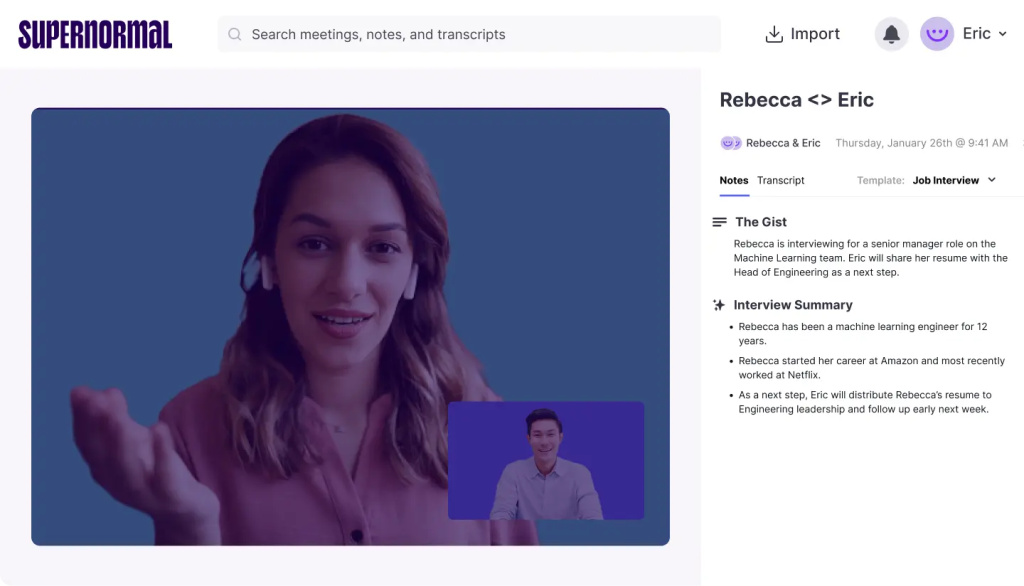
Supernormal is a documentation-first meeting assistant for Zoom and Google Meet that turns conversations into structured, decision-focused records in real time. It uses templates and AI automation to produce consistent agendas, recaps, actions, and owners, then syncs them to your stack without post-call cleanup. With automated action item extraction, decision tracking, a real-time AI assistant for clarifications, 60+ language support, and direct integrations with various tools, Supernormal keeps remote teams aligned and moving.
Why Supernormal is better than MeetGeek
If your priority is standardized, share-ready documentation that drives immediate execution, Supernormal outperforms MeetGeek with template-driven notes, automatic action assignment, and deeper, work-ready integrations. You get consistent outputs across meeting types, faster handoff into the tools your team already uses, and language coverage that supports truly global workflows.
5. Fathom
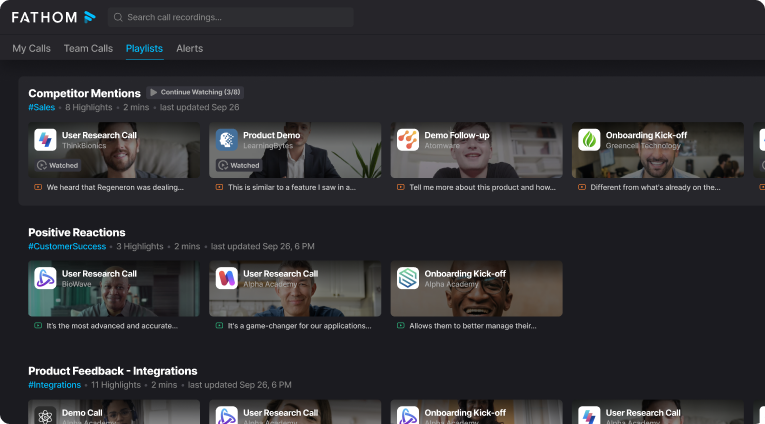
Fathom records, transcribes, and summarizes meetings across Zoom, Google Meet, and Microsoft Teams with real-time transcription that makes live note-taking effortless. It is built for speed and organization: create highlights mid-call, get 1-click AI summaries, instantly download recordings and transcripts, and sync outcomes to tools like Google Docs, Notion, and Asana. Individuals get a standout free plan with unlimited recordings and storage, while teams on paid tiers unlock searchable transcripts across all meetings and simple clip sharing that cuts review time from hours to minutes.
Why Fathom is better than MeetGeek
If you want the fastest path to capture and share without limits or complexity, Fathom wins on its generous free plan, real-time transcription, instant clips and downloads, and mid-call highlight summaries. It is the better pick for individuals and lean teams who value quick highlights and effortless handoff to docs over heavier sales coaching and multi-meeting analytics found in MeetGeek.
6. Avoma
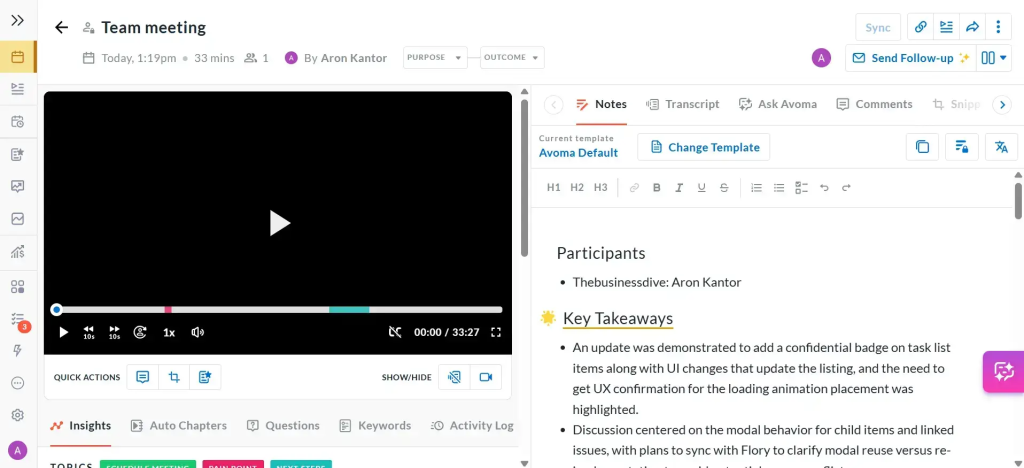
Avoma is an end-to-end meeting lifecycle platform that automates note-taking, real-time transcription, and conversation analysis so you can focus on the discussion. It standardizes prep with agenda templates, captures key moments live, and delivers AI-generated notes plus coaching insights after the call. Built for revenue teams, Avoma surfaces talk-time patterns, objection handling, and sentiment cues, then syncs outcomes into your CRM and conferencing stack for smooth handoffs across sales, CS, and onboarding.
Why Avoma is better than MeetGeek
For sales and CS teams, Avoma goes beyond MeetGeek’s strong summaries with full lifecycle support – structured agendas before the call, real-time capture during, and post-call coaching with deal insights after. The result is tighter discovery, consistent preparation, and actionable coaching signals that improve execution across pipelines, not just better notes.
7. Otter.ai
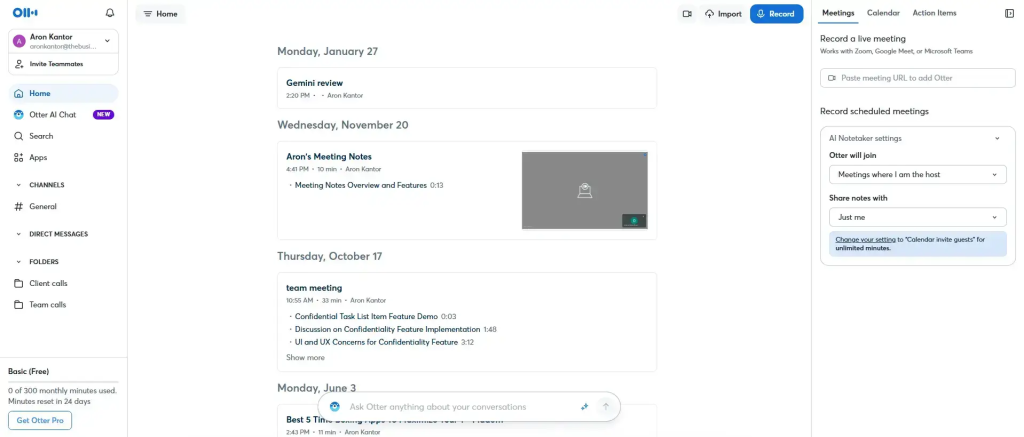
Otter.ai is a transcription‑first tool that captures audio in real time across Zoom, Google Meet, and Microsoft Teams, with speaker identification, timestamps, and live editing. You can add highlights, comments, and action items, auto‑capture shared slides for context, and keep everything searchable in a cross‑device workspace. Popular with journalists, media teams, and universities, Otter keeps setup light and collaboration simple.
Why Otter.ai is better than MeetGeek
If you want fast, reliable live transcription and a clean, shareable text record without extra complexity, Otter is the simpler pick. Real‑time capture, slide syncing, powerful search, and Otter AI chat make it easy to follow along and share outcomes immediately, while its lightweight workflow avoids the heavier CI features and setup overhead you may encounter with MeetGeek.
8. tl;dv
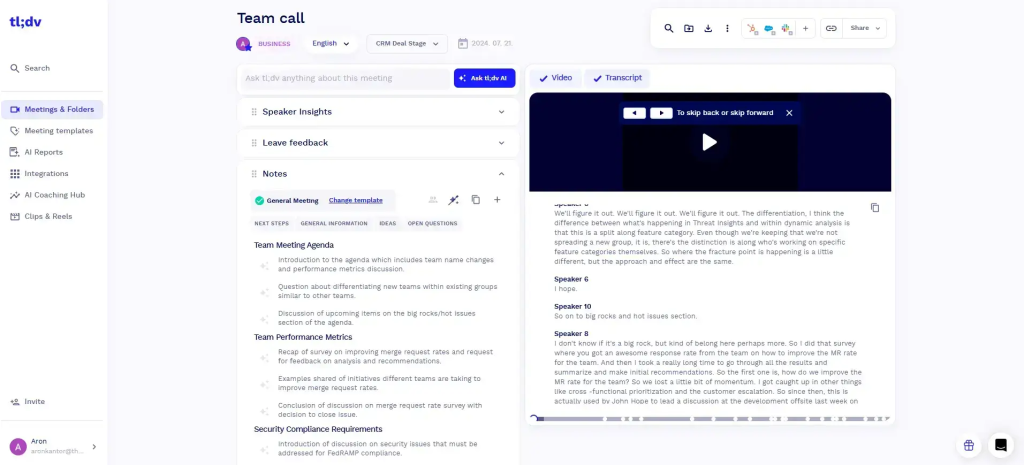
tl;dv is an AI meeting recorder for Google Meet, Microsoft Teams, and Zoom that delivers real-time transcription with solid accuracy, timestamped highlights, and easy clip sharing. Workshop facilitators and product teams use it to capture group discussions, analyze themes, and tailor future sessions. A handy Chrome extension and Zoom integration streamline capture, while the generous free plan supports unlimited recording and transcription in 30+ languages. Pro tiers add integrations to automate workflows from meeting to handoff.
Why tl;dv is better than MeetGeek
If you need fast capture, multi-language transcripts, and shareable highlights without heavy setup, tl;dv is the lighter, more flexible choice. Unlimited recording on the free plan, simple clip sharing, and a strong Chrome workflow make adoption frictionless – a quicker path to usable outputs than MeetGeek’s more complex CI and bot-driven approach.
Conclusion
Choosing the right meeting intelligence stack now impacts time to value, revenue cadence, and risk. MeetGeek is solid for organized notes and summaries, but many teams need deeper client-facing workflows, real-time coaching, or enterprise revenue analytics. The top alternatives in 2026 span distinct jobs to be done.
Match the tool to your workflow. If you share recaps with clients, need white-label spaces, or want AI to create real follow-ups in your stack, start with FuseBase. If your priority is coaching and engagement signals, consider Read.ai or Avoma; for enterprise forecasting and deal risk, pick Gong. For lean capture and highlights, Fathom or tl;dv excel; for transcription-first teams, Otter fits; for standardized documentation, Supernormal is strong. Align the choice to your language needs, compliance posture, and whether you need external-ready summaries versus internal-only coaching to lift productivity and outcomes fast.