

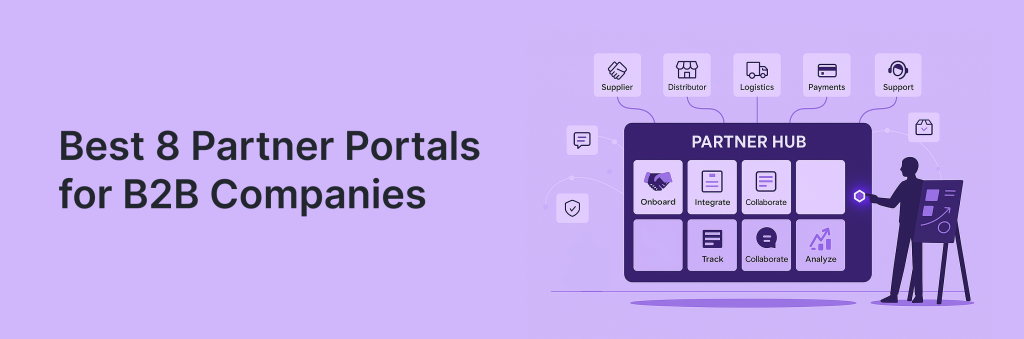
B2B partnerships are powerful, but they’re also complex. You’re juggling different segments, territories, co-marketing plans, and long sales cycles – often across dozens or hundreds of partners. Without a dedicated system, those relationships quickly disappear into inboxes and spreadsheets. Partner portals for B2B companies change that by centralizing onboarding, enablement, deal workflows, and reporting in one place.
In this guide, we’ll look at the top 8 partner portal solutions for B2B organizations, highlight when each one makes sense, and help you understand the trade-offs on features.
Quick Comparison – Best Partner Portals at a Glance
- 1. FuseBase – Best for all-in-one client and partner collaboration
- 2. Moxo – Best for enterprise client & partner portals
- 3. AhSuite – Best for team collaboration & workflow
- 4. Notion – Best for flexible workspace & client portal
- 5. Zendesk – Best for customer support + portals
- 6. SuiteDash – Best for SMB client management & project portal
- 7. Clinked – Best for agencies and financial teams
- 8. Confluence – Best for knowledge base & collaboration
What’s the Partner Portal?
In a B2B context, a partner portal is the digital hub that connects your internal revenue engine with your external ecosystem of resellers, distributors, ISVs, and service partners. It acts as an extension of your CRM and RevOps stack. The partner portal provides partners with structured access to content, training, pipeline updates, and incentives tailored to their segment or region.
But the best B2B partner portals don’t just store files. They orchestrate complex motions like co-selling, lead routing, renewals, and multi-stage approvals. So every partner interaction is trackable, measurable, and aligned with your overall go-to-market strategy.
Key Benefits of Partner Portals to Consider
Before you compare specific tools, it helps to be clear on what partner portals should actually deliver. The goal is a measurable upgrade in how you and your partners work together. Here are the key benefits to look for:
- Faster, more consistent onboarding. Centralize welcome packs, training paths, certifications, and playbooks so every new partner gets the same structured experience.
- Clear, trackable deal workflows. Give partners a straightforward way to submit leads, register deals, request approvals, and track status. This reduces channel conflict, speeds up responses, and makes revenue attribution easier.
- Always-on access to assets and knowledge. Replace “can you resend that deck?” with a single, searchable library of sales materials, pricing, campaigns, and technical docs tailored to each partner segment or region.
- Better visibility into partner performance. Use dashboards and reports to see which partners are active, which campaigns are working, and where deals are stalling. That data helps you prioritize enablement and investments.
- Scalable governance and compliance. Role-based access, audit trails, and controlled sharing help you grow your ecosystem without losing control over sensitive content, pricing, or customer data.
When you’re evaluating the best partner portals for B2B companies, weigh each platform against these benefits.
The Top 8 Partner Portals for B2B Companies
1. FuseBase

FuseBase is an AI-powered portal platform that lets B2B companies build fully branded workspaces for partners, clients, and internal teams. You can create separate partner spaces with tailored access to playbooks, pricing, deal rooms, dashboards, and AI Agents that answer questions or summarize activity on demand. Its database-style dashboards and automation flows make it easier to coordinate co-selling, track shared pipelines, and keep communications in one place instead of scattered across tools.
Who should choose FuseBase?
B2B companies that want white-labeled, AI-enhanced partner portals tightly connected to their day-to-day operations.
Pros
- Works for small and mid-size teams without extra tools.
- Easy to brand and configure.
- Extremely fast setup with no learning curve.
- Looks clean and professional for partner-facing communication.
Cons
- Currently best suited for small to mid-sized partner programs (enterprise version in beta).
2. Moxo
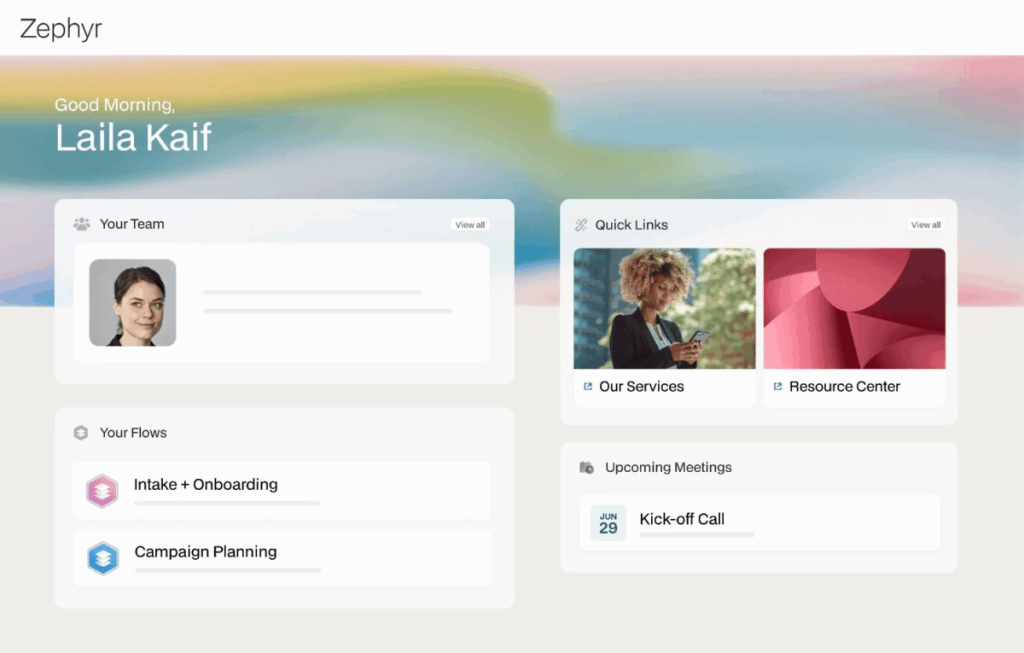
Moxo focuses on high-touch, workflow-driven collaboration with external stakeholders. It offers secure, branded portals where partners can message your team, join video calls, exchange documents, sign forms, and move through structured approval flows from desktop or mobile. For organizations with complex onboarding or service delivery (like financial services, consulting, and vendor management), Moxo’s templated workflows and audit trails help standardize partner processes without sacrificing the personal touch.
Who should choose Moxo?
Teams that rely on secure, conversational workflows and frequent approvals.
Pros
- Very secure and structured.
- Excellent for compliance-heavy industries.
- Great mobile experience and “magic link” style access.
Cons
- Limited flexibility.
- Less friendly for creative or marketing teams.
3. AhSuite
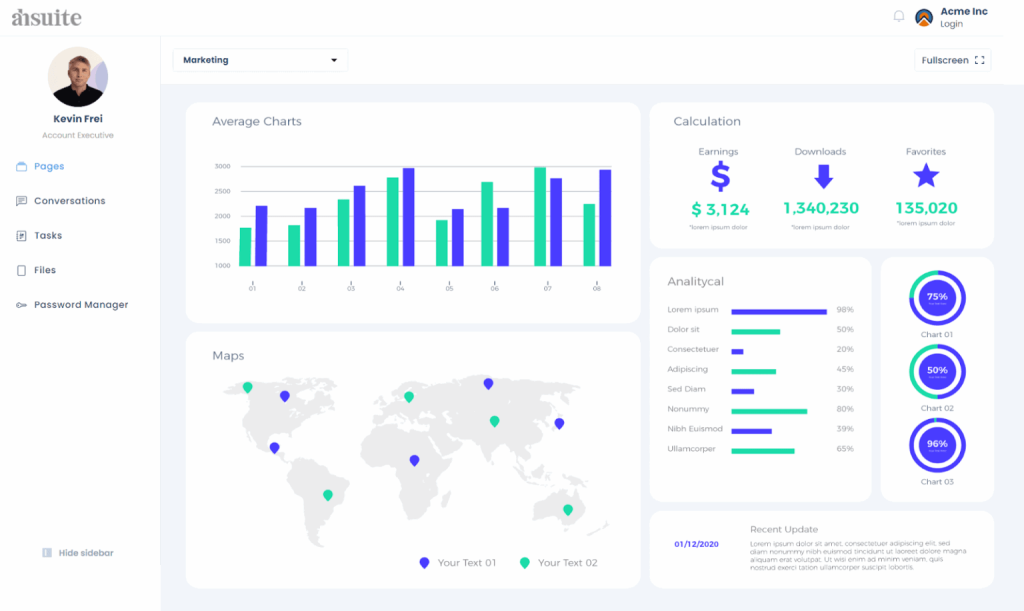
AhSuite offers clean, simple client portals that B2B teams can repurpose as lightweight partner hubs. Each portal can include tasks, file sharing, password management, and work journals. This platform gives partners a single place to see what’s happening and access shared resources. It’s intentionally minimal: rather than a sprawling platform, AhSuite focuses on essentials and an organized, professional presentation that’s quick to roll out across many accounts.
Who should choose AhSuite?
Lean teams that want straightforward partner portals with core collaboration features and minimal setup overhead.
Pros
- Keeps workflows organized.
- Good for internal teams and client updates.
- Easy for external partners to understand.
Cons
- Slightly dated interface.
- Limited branding options.
4. Notion
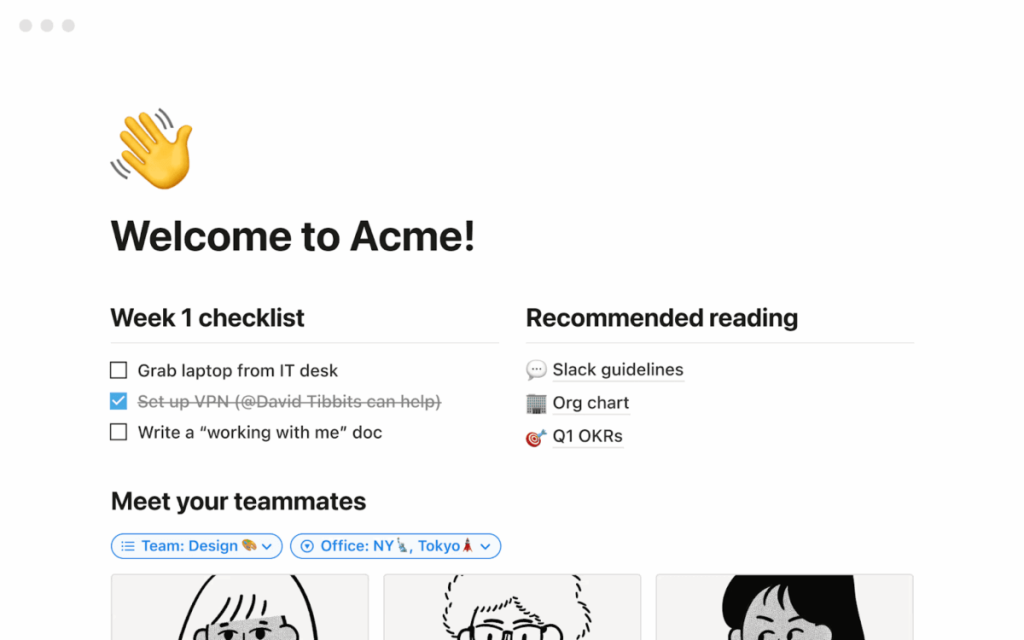
Notion is a flexible, all-in-one workspace that many companies use as the “front door” for partner enablement. You can build partner hubs that combine wikis, checklists, roadmaps, and simple databases into one structured portal. Then share specific pages or spaces with different partner tiers. It doesn’t provide specialized deal registration or channel incentives out of the box, but its versatility and templates make it ideal as a knowledge and resource layer above your CRM and partner systems.
Who should choose Notion?
B2B teams that need a highly customizable partner wiki and resource hub more than a heavy channel operations suite.
Pros
- Highly flexible and lightweight.
- Works for internal and external collaboration.
- Strong database views.
Cons
- DIY setup can be time-consuming.
- Lacks native client portal automation.
5. Zendesk
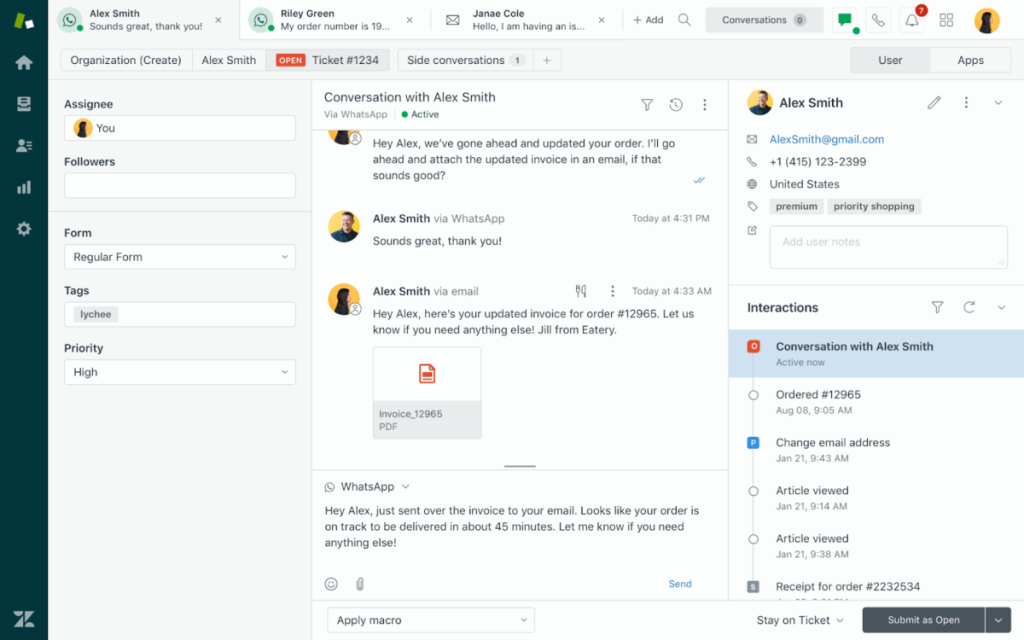
Zendesk is best known for customer service, but it also serves as a powerful support-centric partner portal. Using Zendesk’s help center and portal capabilities, you can give partners a dedicated login. There, they can submit and track tickets, browse a knowledge base, and participate in community forums. For companies with large partner networks and complex products, Zendesk’s AI-powered knowledge and reporting tools help reduce support load while keeping partner issues transparent and trackable.
Who should choose Zendesk?
Organizations where partner support, SLAs, and self-service knowledge bases are central to the relationship.
Pros
- Very robust for support-driven teams.
- Integrates with most CRMs and analytics tools.
- Strong enterprise footprint, including AI-powered assistance and analytics.
Cons
- Oriented around support rather than full partner lifecycle
- Can feel overwhelming for non-support users.
6. SuiteDash
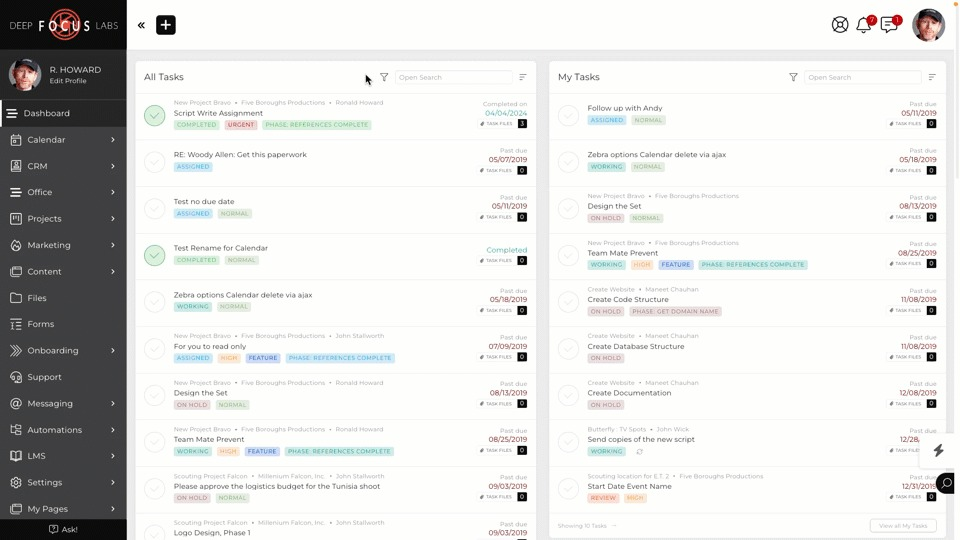
SuiteDash is an all-in-one business management platform that bundles CRM, project management, billing, file sharing, and client portals into a single environment. B2B companies can configure SuiteDash portals for partners to view shared pipelines, access collateral, sign contracts, and manage recurring billing or commissions. Its white-label options and deep feature set make it appealing for SMBs that want to standardize both client and partner operations without buying multiple tools.
Who should choose SuiteDash?
SMBs looking for a unified platform that covers CRM, projects, billing, and partner/client portals in one stack.
Pros
- Affordable and fairly customizable.
- Branded client experience.
- Broad feature set: CRM, portals, projects, billing, and automations.
Cons
- Can feel cluttered and overwhelming.
- Integrations are limited compared to other platforms.
7. Clinked
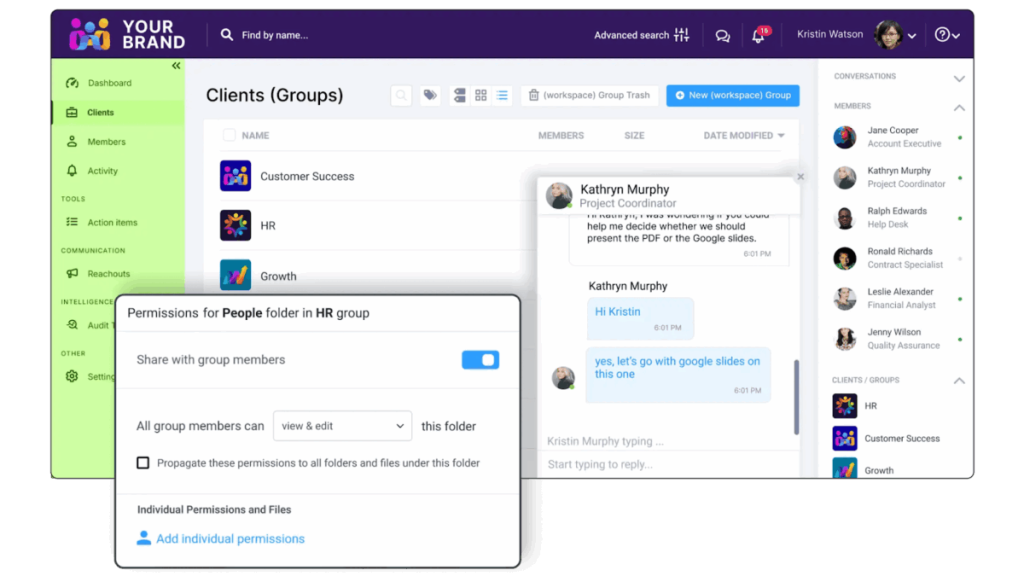
Clinked is a secure, white-label client portal that adapts well to partner collaboration. It provides branded spaces where you can share documents, manage tasks, exchange messages, and track activity with external organizations. Because it’s designed for fast setup and straightforward collaboration, Clinked works well for firms that primarily need a safe, organized environment to co-manage projects, deals, or shared accounts with partners.
Who should choose Clinked?
B2B teams that want a secure, branded collaboration space for partners with strong document and communication features.
Pros
- Great for compliance-heavy or data-sensitive industries.
- White-label branding options.
- Built-in onboarding workflows and forms.
Cons
- UI feels dated compared to newer SaaS tools.
- Limited workflow automation.
8. Confluence

Confluence, from Atlassian, is a team workspace and documentation platform that you can turn into a structured partner knowledge hub. Teams can publish integration guides, implementation playbooks, certification content, and release notes, then lock them down by space or page for different partner segments. When paired with Jira and the broader Atlassian ecosystem, Confluence becomes the documentation layer of a more complete partner portal, especially for technical or developer-heavy partner programs.
Who should choose Confluence?
Companies running technical partner programs that require deep, well-organized documentation tied to their existing Atlassian stack.
Pros
- Excellent for technical documentation and knowledge sharing.
- Deep integration with Jira and the Atlassian ecosystem
- Mature permissioning and space structure for segmenting content across partner tiers, regions, or solution types.
Cons
- Can be confusing for non-technical partners.
- Less polished as a partner-facing portal.
The Bottom Line
There’s no single “best” partner portal for every B2B company. There’s the best fit for your size, tech stack, and partner motion. If you’re looking for modern, branded partner workspaces with AI and automation, FuseBase stands out as a flexible hub for enablement and collaboration. For high-touch, workflow-heavy relationships, Moxo gives you secure, mobile-first interaction with built-in approvals and messaging.
If your priority is simple, low-friction collaboration, AhSuite, Clinked, and Notion work well as lightweight partner hubs for files, updates, and documentation. When support and self-service are central to your partner experience, Zendesk shines as a scalable portal for tickets and knowledge bases. SuiteDash is a strong option if you want an all-in-one stack. Finally, Confluence is the right call when you need a serious documentation backbone for technical or developer-focused partner programs.